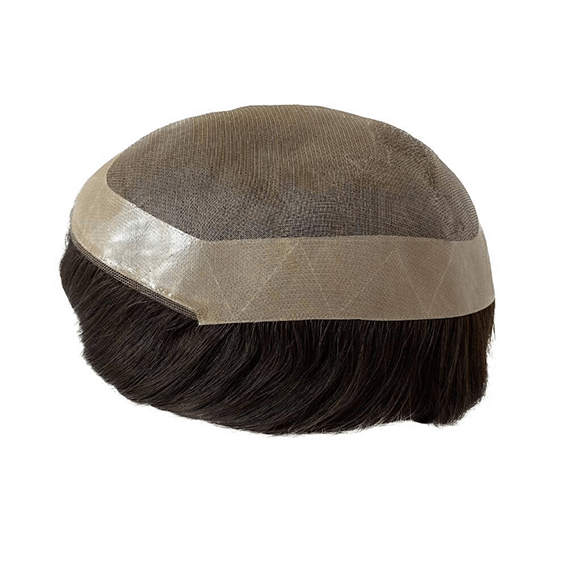
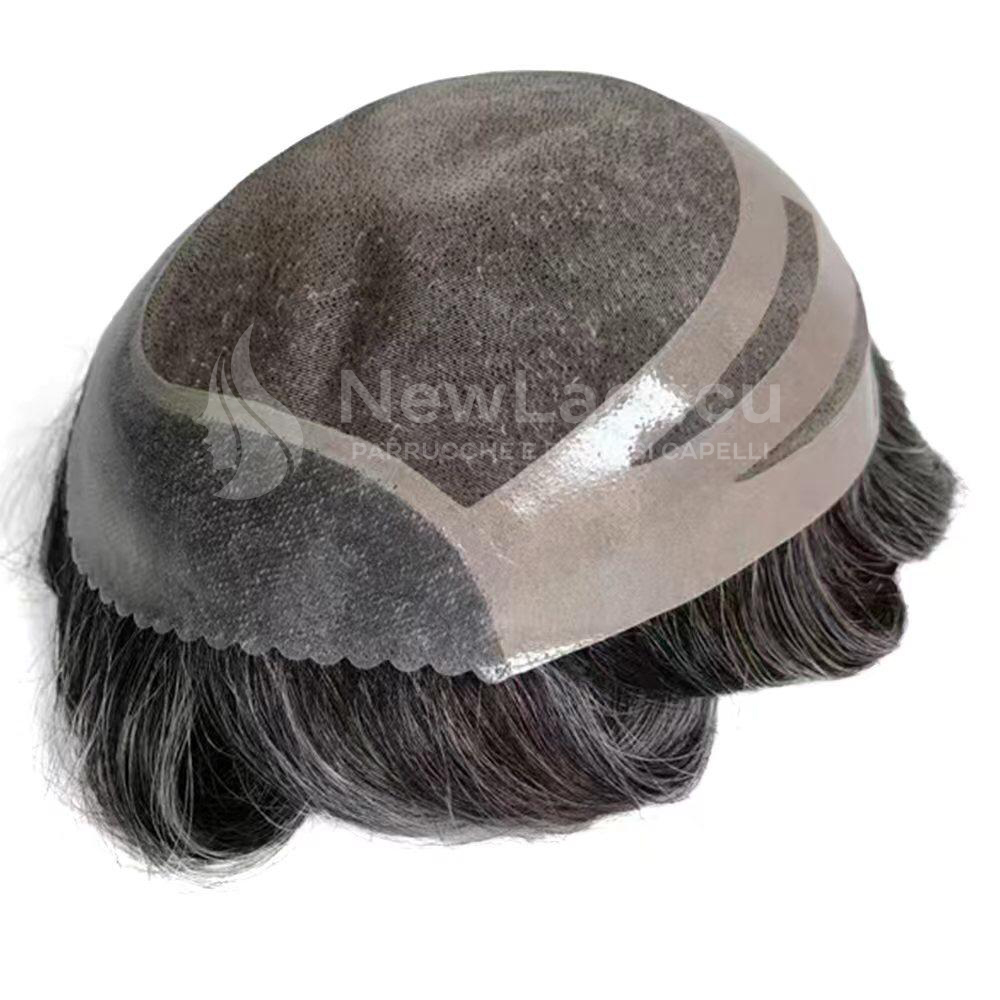
When a hair system starts lifting, the unit isn’t always the problem. More often than you’d think, it’s the bond holding it in place.
Many men who see the front edge peel up on day three blame the system straight away. They wonder if the lace was too delicate or the base the wrong size. Sometimes that’s true. But just as often, the adhesive simply didn’t suit the base, the skin underneath it or the week you put it through.
Glue and tape both work. They just do different jobs. Once you see what each one is good at, choosing stops being guesswork and becomes something you can plan.
What changes between liquid adhesive and tape
Liquid hair system glue goes on wet, in thin layers, and cures into a flexible film between scalp and base. It settles into the texture of the base, so the bond is close and low-profile. The catch is the learning curve: each layer needs to turn tacky, and removal takes solvent and some patience.
Hair system tape is pre-cut or cut from a roll, pressed on and done. It’s forgiving, quick and comes off cleanly. That’s why many beginners start with it, and why plenty of experienced wearers keep it for the back and sides. It does sit a little thicker, though, and usually gives up sooner when heat and oil build up.
| Liquid adhesive | Tape |
Application | Thin layers, wait until tacky | Press on, ready immediately |
Profile | Very thin, close to the skin | Slightly thicker |
Typical hold | One to several weeks | A few days to about a week |
Removal | Needs solvent and time | Quick and clean |
Best for | Front hairline, longer wear | Beginners, sides and back, weekly routines |
Think of glue as a tailored suit and tape as a good jacket off the rack. One fits more closely. The other is ready the minute you need it.
Matching the bond to your base: lace, skin and mono
The base matters more than most people expect.
- Lace: an open mesh, so liquid adhesive grips through the fibers and gives the most natural hairline. Tape works, but holds for less time.
- Skin (poly): a smooth, solid surface that takes both glue and tape well. This is where you have the most freedom.
- Mono: usually finished with a poly perimeter, and that border is where the bond goes. Tape strips are the common choice; a thin line of liquid adds hold.
Base | Liquid adhesive | Tape | Common setup |
Lace | Excellent | Fair | Liquid at the front, tape at the back |
Skin (poly) | Very good | Very good | Tape while learning, then liquid |
Mono | Good on the perimeter | Very good on the perimeter | Tape strips on the border |
Not sure which base you have, or which one fits your routine? Our men’s hair systems page lists the construction of each model.
239,00 € Original price was: 239,00 €.179,25 €Current price is: 179,25 €.
319,00 € Original price was: 319,00 €.239,25 €Current price is: 239,25 €.
Oily skin, sweat and humid summers: when the hold gives up
Sebum is the quiet enemy of any bond. Your scalp produces it all day, and it creeps under the edges until the adhesive loses grip. A gym session, a humid July or a long run speeds that up.
A few habits make a real difference:
- Clean the bonding area with alcohol right before applying, even if the skin looks clean.
- Use a scalp protector to form a barrier between skin and adhesive.
- If you sweat heavily, choose products made for heat and humidity, not general-purpose pharmacy tape.
- Try a combination setup: liquid at the front, where lifting shows, tape around the sides and back.
Odor or itching under a unit doesn’t necessarily mean you’re doing something wrong. It usually comes from sebum and bacteria building up in a closed space. Bases designed to slow that process, such as our NOBACT range, can help keep both bond and scalp fresher between cleanings.
How long each option holds and what shortens it
The honest answer is “it depends”, but the ranges are fairly consistent.
Bond type | Typical hold | Suits you if… |
Standard tape | A few days to about a week | You clean and reattach weekly |
Extended-wear tape | Up to around two weeks for some wearers | You want tape’s ease with a bit more time |
Liquid adhesive | One to several weeks | You’d rather leave the unit alone longer |
What shortens the hold, roughly in order:
- Oily or poorly cleaned skin
- Sweat, heat and humidity
- Attaching the unit before the glue is tacky
- Hair regrowth under the base
- Conditioner or styling products running into the edges
So plan backwards from your week. If Sunday is your cleaning day, a tape setup may be all you need. If you want two or three weeks between sessions, a liquid bond on a clean, shaved scalp is the more realistic choice.
Sensitive scalp: patch test and low-irritation options
Some people react to adhesive. Redness, itching or small bumps along the bond line are the usual signs, and they’re worth taking seriously.
Before committing to a new glue or tape, do a patch test:
- Apply a small amount behind your ear or on your inner forearm.
- Leave it for 24 to 48 hours.
- Check for redness or itching. No reaction is a good sign, though not a guarantee.
If your skin is sensitive, look for medical-grade tapes and low-irritation adhesives. Always use a scalp protector, and give your skin a break between applications when you can. If irritation continues, stop using the product and see a dermatologist.
A starter set for your first month
You don’t need a shelf full of bottles. For the first month, a simple set is enough:
- Scalp protector, to shield the skin and slow sebum
- Alcohol, to clean the bonding area
- Tape, pre-cut contours or a roll, for the sides and back
- Liquid adhesive, for a front-hairline bond when you’re ready
- Adhesive remover, to take the unit off without damaging the base
- Small brush, to spread glue in thin, even layers
Start with tape. Move to liquid at the front after a few applications. By week four you’ll have a good idea of which bond fits your skin, learned on your own head rather than from someone else’s.
Our maintenance kit brings the essentials together. For the application itself, see A beginner’s guide to applying a hair system at home. For cleaning and reattaching, see Hair system maintenance: the complete step-by-step care guide.
Choosing your bond with Newlacecu
Questions people ask before switching adhesive
Can I use glue and tape at the same time?
Yes, and many wearers do. The most common setup is liquid adhesive along the front hairline, where a natural look and a secure edge matter most, and tape around the sides and back, where easy removal counts more.
Is hair system glue bad for my scalp?
For most people, no, as long as you use a scalp protector, clean the skin properly and remove the adhesive with the right solvent instead of pulling it off. With sensitive skin, patch test every new product and choose low-irritation formulas.
Why does my front edge keep lifting after a few days?
The usual causes are sebum, sweat, a bond that doesn’t suit the base, or attaching the unit before the glue turned tacky. Cleaning with alcohol, adding a scalp protector and switching to liquid at the front often solves it.
Do I need to change adhesive in summer?
Often, yes. Heat and humidity shorten the hold of most tapes. Many wearers switch to a sweat-resistant tape or a liquid adhesive for the summer months, or reattach more often.